Vibe Coder · Unit 10: APIs · Lesson 11 of 13
The Responses API
Engineers: OpenAI’s current API for model calls, how it maps to what you know, and where it differs.
Read the short notes and pictures.Do everything inside a blue frame.
The other major API
OpenAI’s Responses API covers the same ground as the Messages API with different names and a few different defaults. Implementing your feature against both, behind one interface, keeps your product portable.
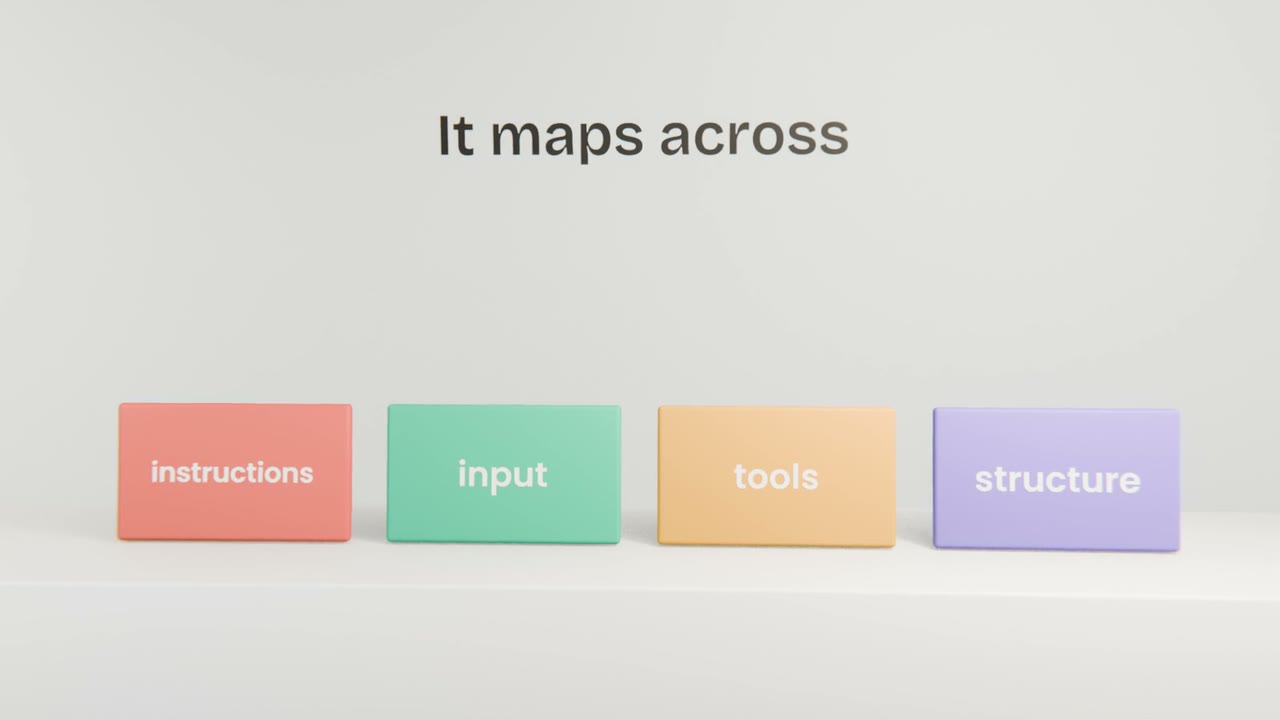
Mapping the concepts
System prompt
Instructions.
Messages
Input items.
Tool use
Function calling, plus hosted tools.
Structured output
A JSON schema response format.

One interface, two providers
Define your own function
Inputs and outputs in your terms.
Write an adapter per provider
Small and tested.
Run the same evaluation
Same inputs, compare outputs.
Choose by task
And keep the switch.
Add a second provider
Implement your feature against the Responses API behind the same interface, with the same schema and tests. Run your inputs through both and record quality, latency and cost.
Done when
A provider switch is now a configuration change.
Keep these
- The Responses API covers the same concepts.
- It can hold state and offers hosted tools.
- Hide providers behind your own interface.