Vibe Coder · Unit 13: Testing and Security · Lesson 7 of 11
Try to break login
Attack your own sign-in and access rules the way a curious stranger would, before one does.
Read the short notes and pictures.Do everything inside a blue frame.
Thinking like an intruder
Most break-ins on small apps are simple: a page that forgot to check who is asking, or a database rule that is too generous. You can find these in an hour by trying them.
The attempts
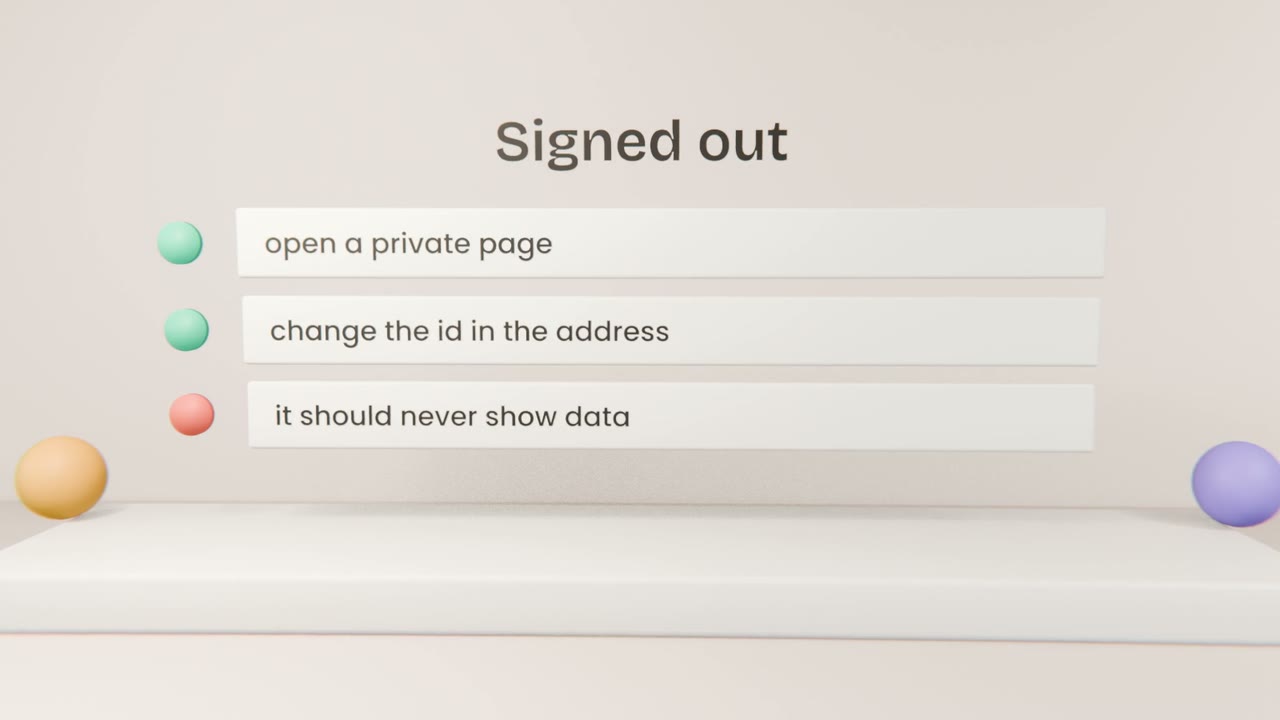
Signed out
Every private page and address should send you to sign in.
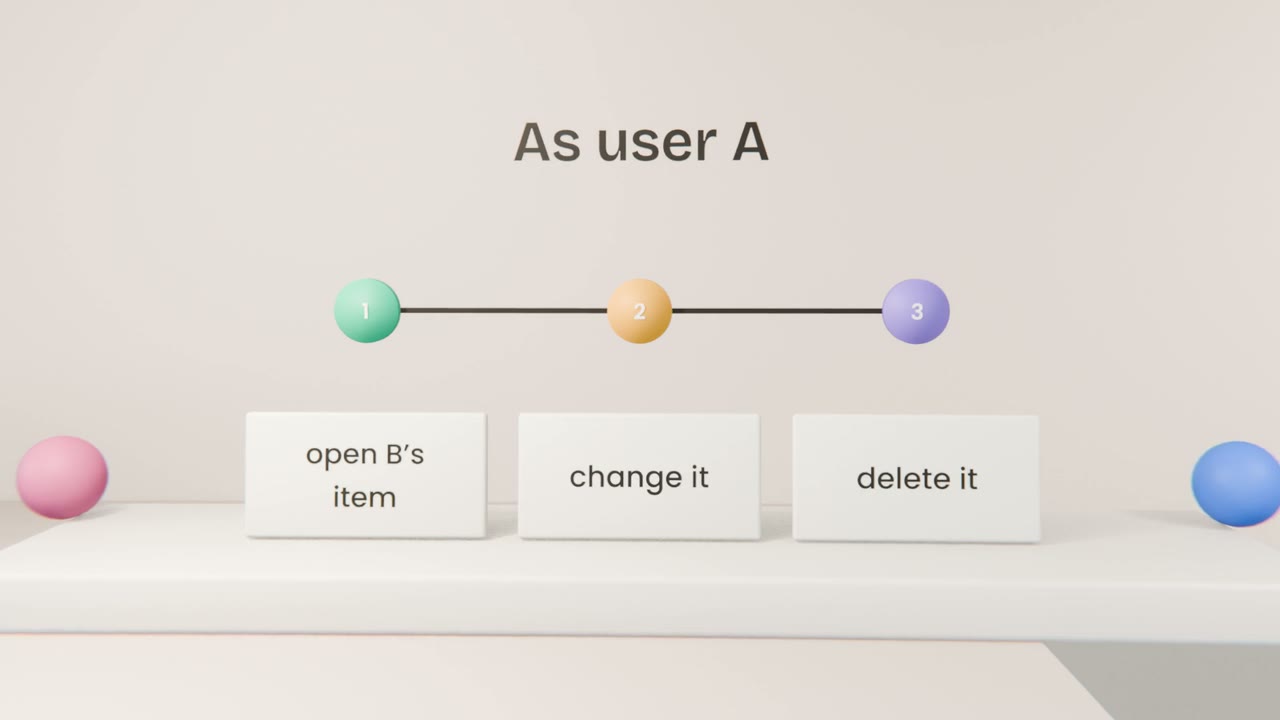
Wrong user
Use two accounts. Swap ids in addresses.
Around the interface
Have Claude Code query the database with the public key as an anonymous user and as the wrong user.
Sign-up abuse
Can someone create a thousand accounts? Add limits.
If something gets through
Fix the rule, not the screen
Hiding a button is not security.
Add a test
So it cannot come back.
Check other tables
The same mistake is often repeated.
Attack your own access rules
Run all four attempts with two accounts and with Claude Code querying the database directly. Fix every hole at the rule level and add each case to your test plan.
Done when
Repeat after any change to tables or sign-in.
Keep these
- Try private pages signed out.
- Try other users’ data with two accounts.
- Fix at the rule level.