Vibe Coder · Unit 6: Thinking in Products · Lesson 4 of 9
Write the brief
Turn the problem, the user and the scope into a one-page brief that Claude, a teammate or a client can act on.
Read the short notes and pictures.Do everything inside a blue frame.
One page that everyone can act on
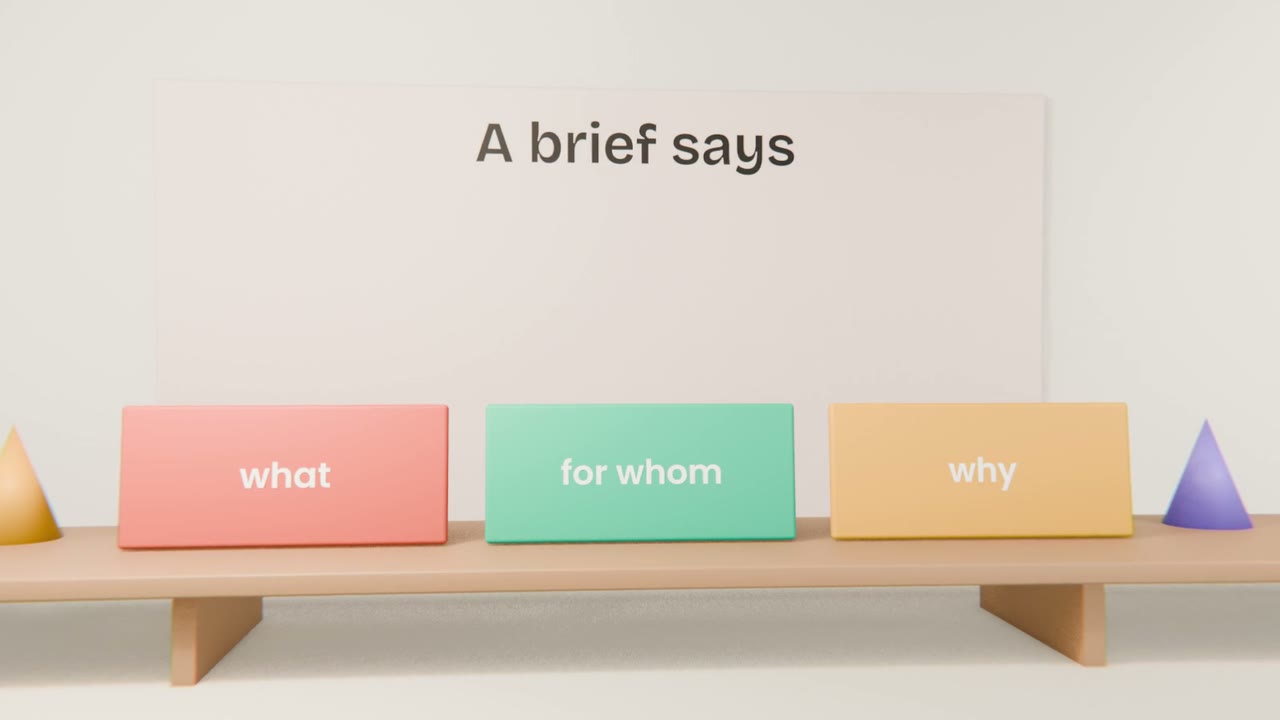
A brief is the shortest document that lets someone else do the work without you in the room. That someone is often Claude. A clear brief in your project means every chat starts from the same understanding.
What goes on the page
The problem
Your one sentence.
The user
Your five lines.
The one job
What the first version lets them do.
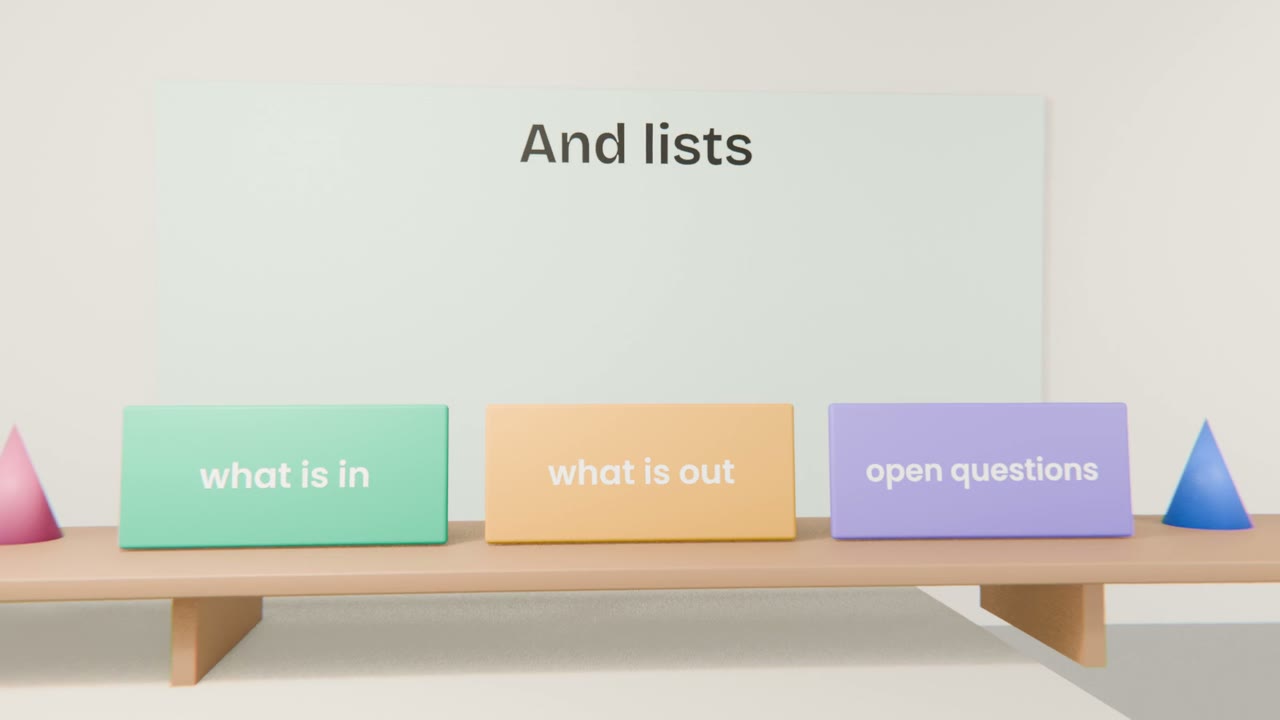
In and out
Must-haves, and the Later list.
Open questions
What you have not decided, so nobody guesses.
Writing it with Claude
Give it your notes
Everything from this unit so far.
Ask for one page
In plain words, with those five headings.
Cut it
Remove anything that is not a decision or a fact.
Test it on a person
Ask them to explain the product back to you.
Write your one-page brief
With Claude, turn your problem sentence, user description and scope into a one-page brief with the five headings. Test it on one person, fix what they misunderstood, and replace the old brief in your project files.
Done when
Keep this file current. It is the source of truth for the build.
Keep these
- A brief fits on one page.
- It says what, for whom, why, in, out and undecided.
- Test it by having someone explain it back.