Vibe Coder · Unit 2: How Claude and ChatGPT Work · Lesson 5 of 7
Thinking and tools
A quick reply, thinking first, or an agent that plans, acts and checks. What each one is and when to use it.
Read the short notes and pictures.Do everything inside a blue frame.
Three ways a model can work
So far you have seen the plain reply: the model reads your message and writes an answer in one pass. Claude and ChatGPT can do two more things, and most of this course depends on them. They can think before answering, and they can use tools.
Thinking first
With extended thinking on, the model works through the problem before it writes the answer: it lays out the steps, tries an approach, and checks it. You can open that thinking and read it. The answer takes longer and is better on hard problems, such as planning a product, finding a bug or comparing options with trade-offs.
Quick reply
SecondsAnswers at once. Right for simple questions, rewrites and small edits.
Thinking first
LongerWorks the problem through, then answers. Right for plans, hard bugs and decisions.
Tools let it act
On its own, a model can only write text. A tool is something the app lets the model use to do more than write. The model decides when a tool would help, asks the app to run it, and reads the result.
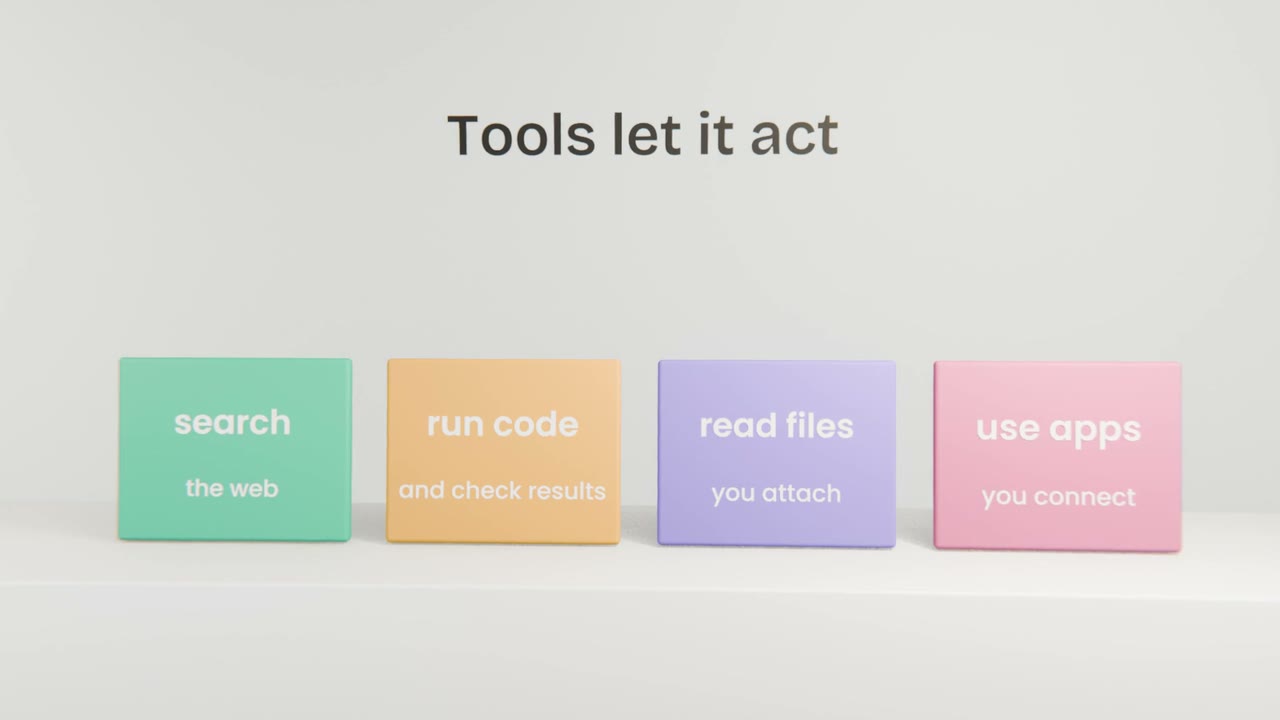
Search
Looks things up on the web and reads the pages. This is how it answers past its cutoff.
Run code
Writes a small program and runs it, to do sums, analyse a spreadsheet or draw a chart, instead of guessing the numbers.
Read and write files
Opens the documents you attach, and creates new ones: a document, a page, an app.
Use your apps
Works in the apps you connect, such as your drive, your calendar or GitHub.
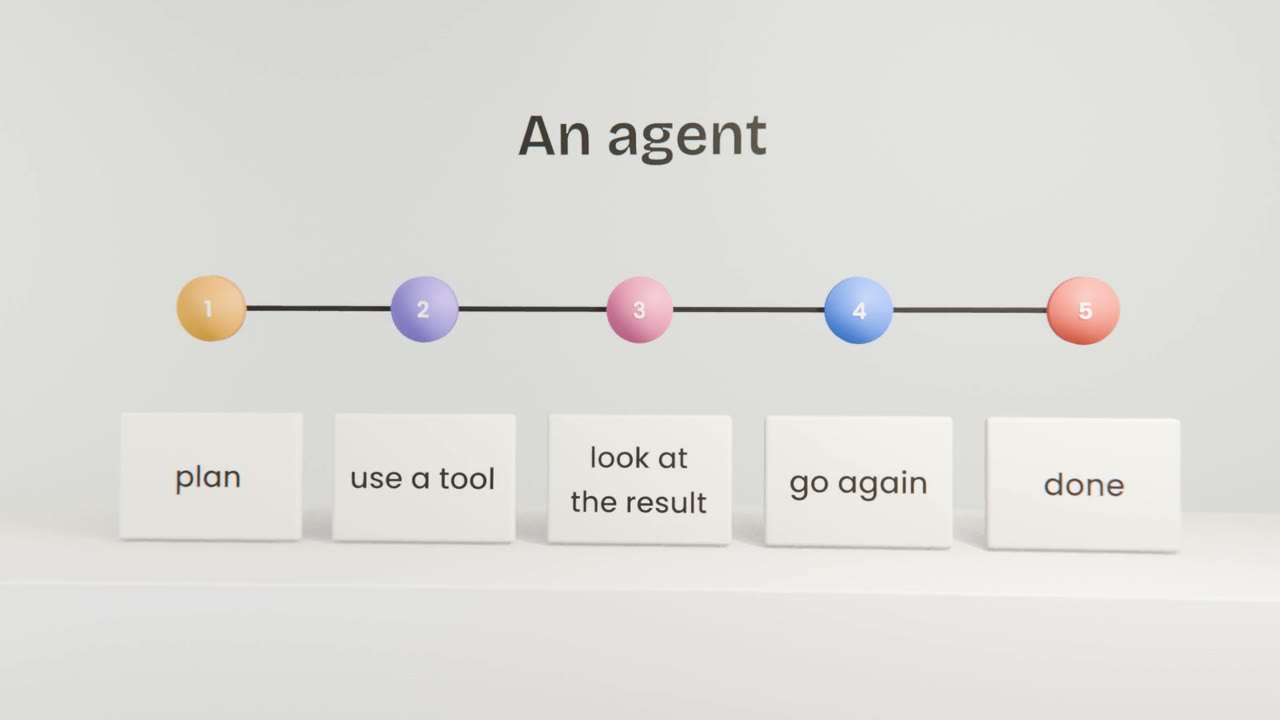
An agent puts them together
An agent is a model that keeps going on its own: it makes a plan, uses a tool, looks at the result, and decides what to do next, until the job is done. Claude Code, which you will use to build your product, is an agent. You give it a goal such as "add a sign-up page", and it reads your code, writes new files, runs the app, and fixes what breaks.
Which to use
Quick reply
Simple questions"Rewrite this sentence." "What does this error mean?"
Thinking
Hard problems"Compare these three pricing models for my product and recommend one."
Agent
Many steps"Build the sign-up page, connect it to the database, and test it."
Plan the first version with thinking on
Paste your handover note and ask, with extended thinking on, for a plan of the smallest first version: what it does, what it leaves out, and the three riskiest assumptions. Read the thinking, then add the plan to the brief under "First version".
Done when
This plan is what you will prototype in Unit 7.
Keep these
- A plain reply is written in one pass.
- Extended thinking works through the problem first: slower, and better on hard problems.
- Tools let the model search, run code, read and write files, and use your apps.
- An agent plans, acts and checks in a loop until the job is done. Claude Code is one.