Types Of AI Agents
Learn the five main types of AI agents: simple reflex, model-based reflex, goal-based, utility-based, and learning agents.
Types of AI Agents
AI agents are systems that can observe something, make a decision, and take an action.
A simple chatbot usually waits for your message and replies. But an AI agent can go a step further. It can use tools, follow goals, remember information, make decisions, and sometimes improve from feedback.
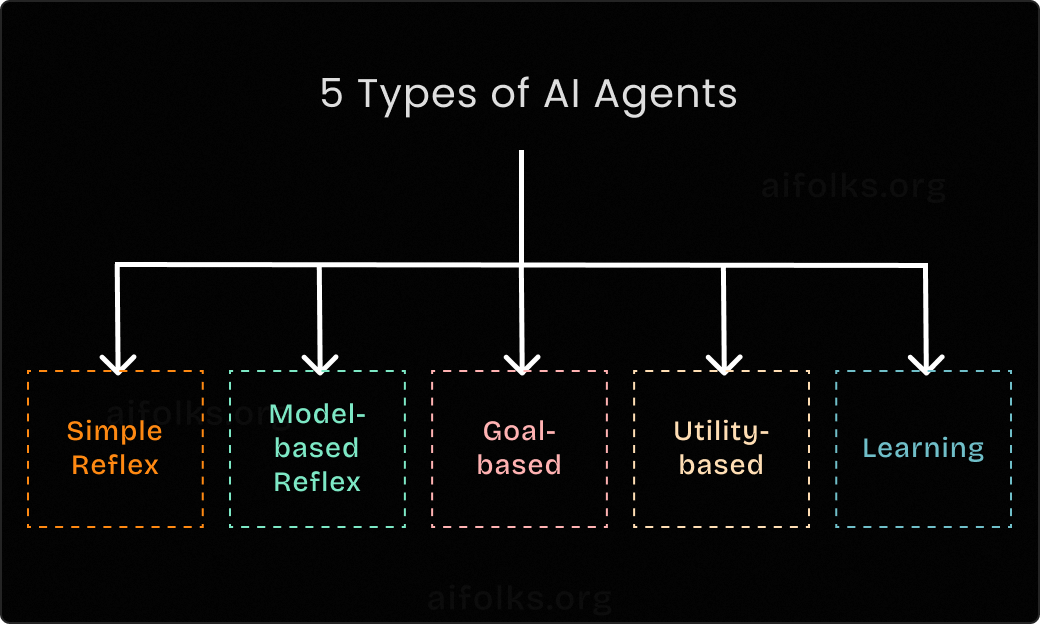
Not all AI agents work in the same way. Some are very simple. Some are more advanced. A common way to understand them is by looking at these 5 types of AI agents:
- Simple reflex agents
- Model-based reflex agents
- Goal-based agents
- Utility-based agents
- Learning agents
1. Simple Reflex Agents
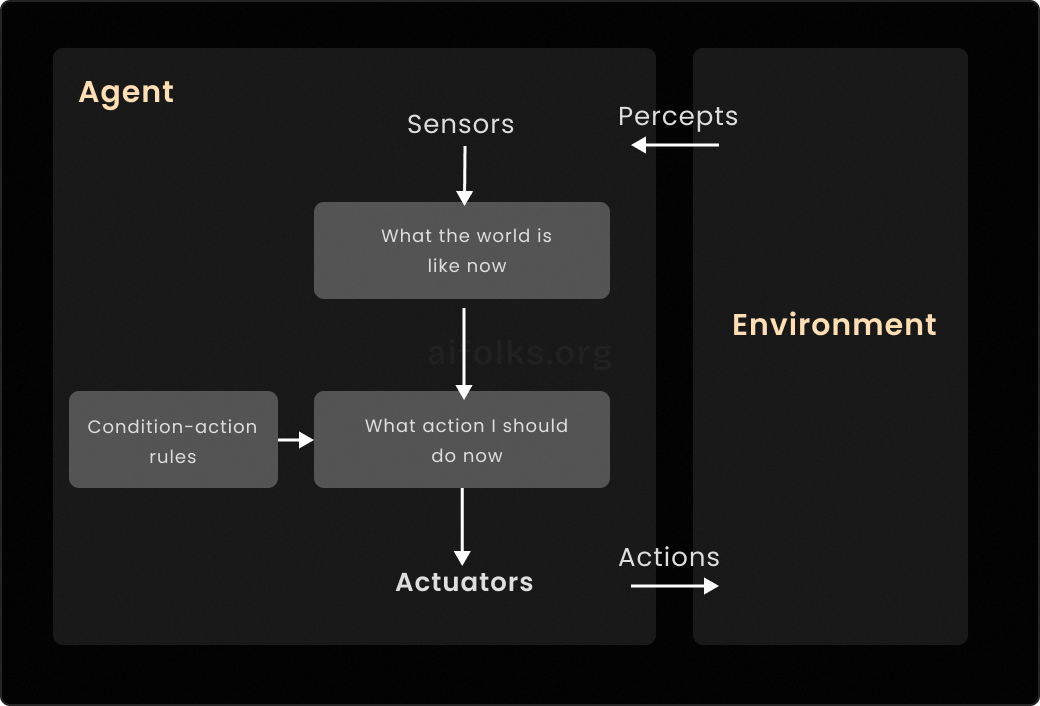
A simple reflex agent works using basic rules.
It looks at the current situation and takes an action based only on what it sees right now.
For example:
- If the temperature is high, turn on the fan.
- If the user says “hello”, reply with a greeting.
- If the email contains “invoice”, move it to the finance folder.
This type of agent does not think deeply. It does not remember the past. It simply follows a rule: if this happens, do that.
Simple reflex agents are useful when the task is predictable and does not need memory or planning.
2. Model-Based Reflex Agents
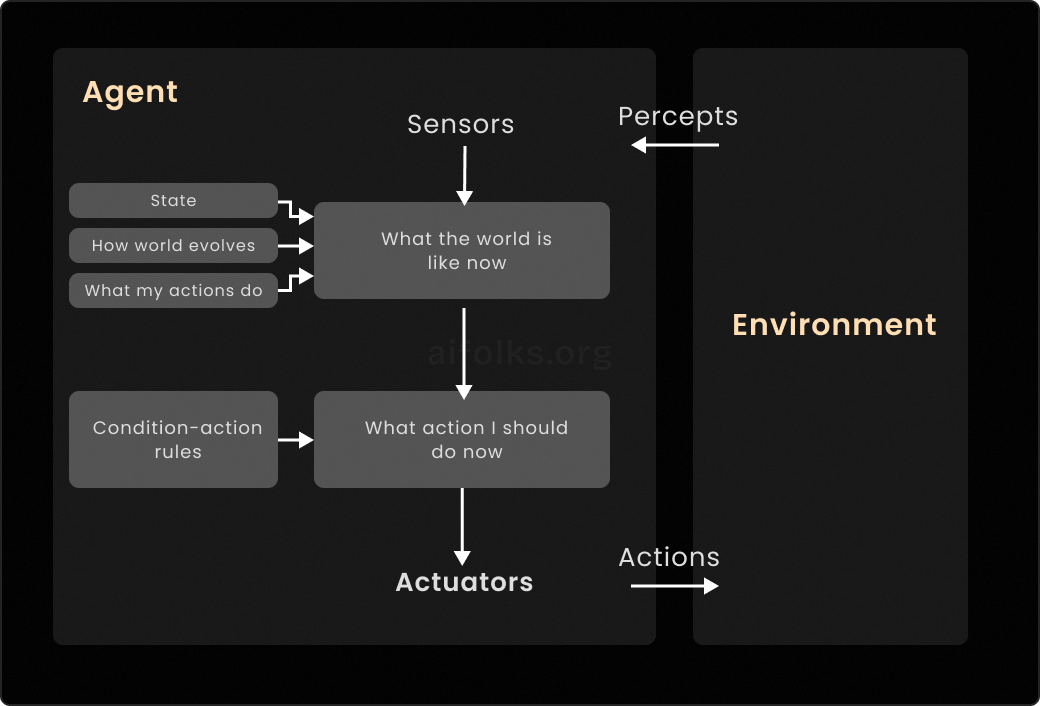
A model-based reflex agent is slightly smarter.
It does not only look at the current situation. It also keeps some internal understanding of the world.
This internal model helps the agent make better decisions when it cannot see everything directly.
For example, a robot vacuum may remember the layout of a room. Even if it cannot see the whole room at once, it can use its internal map to decide where to clean next.
In AI systems, this could mean the agent remembers:
- What happened earlier
- What the user already asked
- What tools were used
- What state the task is currently in
This makes the agent more useful than a simple rule-based system.
If you are learning how memory and context help AI systems work better, you may also like What is Context Engineering?.
3. Goal-Based Agents
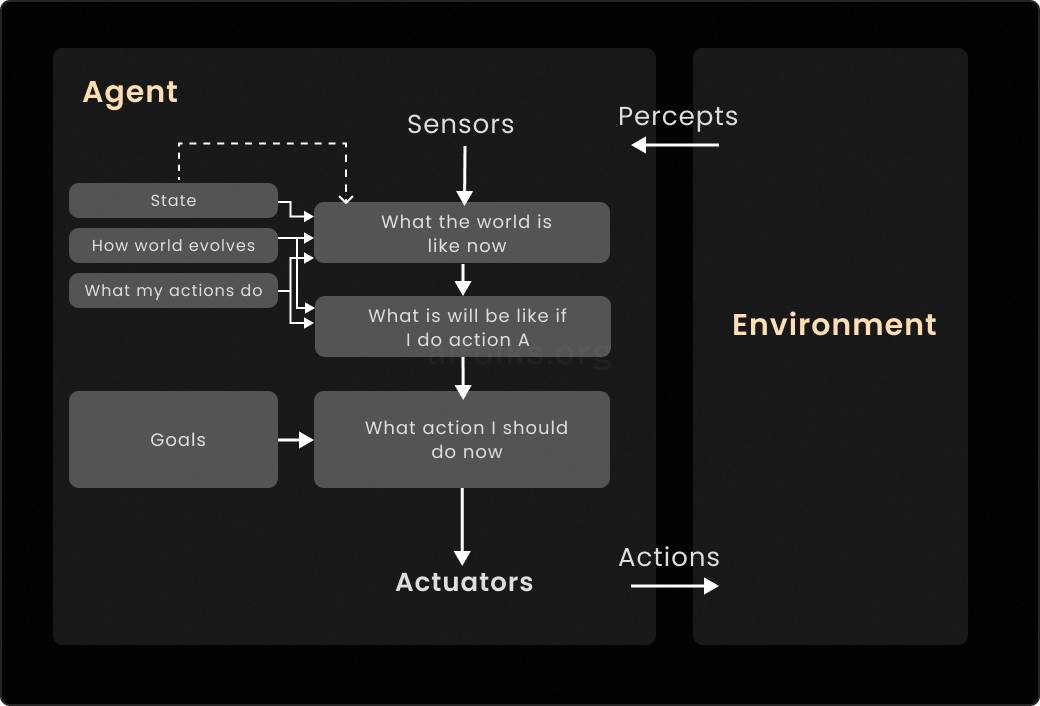
A goal-based agent makes decisions based on a target it wants to achieve.
Instead of only reacting to the current situation, it asks:
“What action will help me reach the goal?”
For example, if the goal is to book the cheapest flight, the agent may:
- Search different airlines
- Compare prices
- Check travel dates
- Filter bad options
- Suggest the best route
This type of agent is more flexible because it can choose between different actions depending on the goal.
Goal-based agents are important in AI because many real-world tasks are not just one-step responses. They require planning.
For example:
- Create a study plan
- Research a topic
- Build a website
- Debug a codebase
- Plan a trip
- Write and schedule content
A goal-based agent works by moving step by step toward the final outcome.
4. Utility-Based Agents
A utility-based agent does not just ask, “Can I reach the goal?”
It also asks, “Which option is the best?”
This agent compares different choices and selects the one with the highest value or utility.
For example, imagine an AI travel agent. There may be many flights that reach the destination. But the best option depends on multiple factors:
- Price
- Travel time
- Number of stops
- Baggage allowance
- Departure time
- Comfort
- Cancellation policy
A utility-based agent tries to choose the option that gives the best overall result.
This is useful when there are many possible answers and the agent must make trade-offs.
In AI engineering, utility-based thinking is important because the “best” answer is not always the fastest or cheapest. Sometimes it is the safest, most accurate, most useful, or most reliable option.
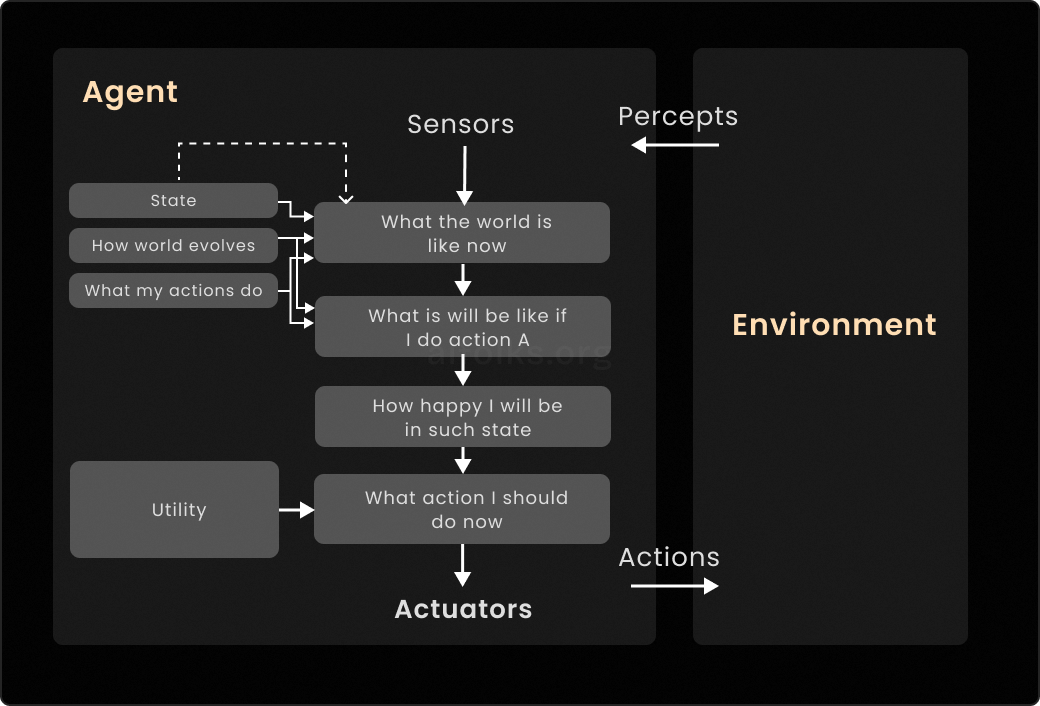
5. Learning Agents
A learning agent improves over time.
It can learn from feedback, past actions, mistakes, and new information.
For example, a recommendation system becomes better when it learns what users click, watch, skip, or buy.
An AI assistant can also become better if it learns:
- What style the user prefers
- Which answers were helpful
- Which tools worked well
- Which mistakes to avoid
- What patterns appear again and again
Learning agents are powerful because they do not stay fixed. They can adapt.
This is one reason modern AI agents are becoming more interesting. They can combine tools, memory, feedback, and learning to become more useful over time.
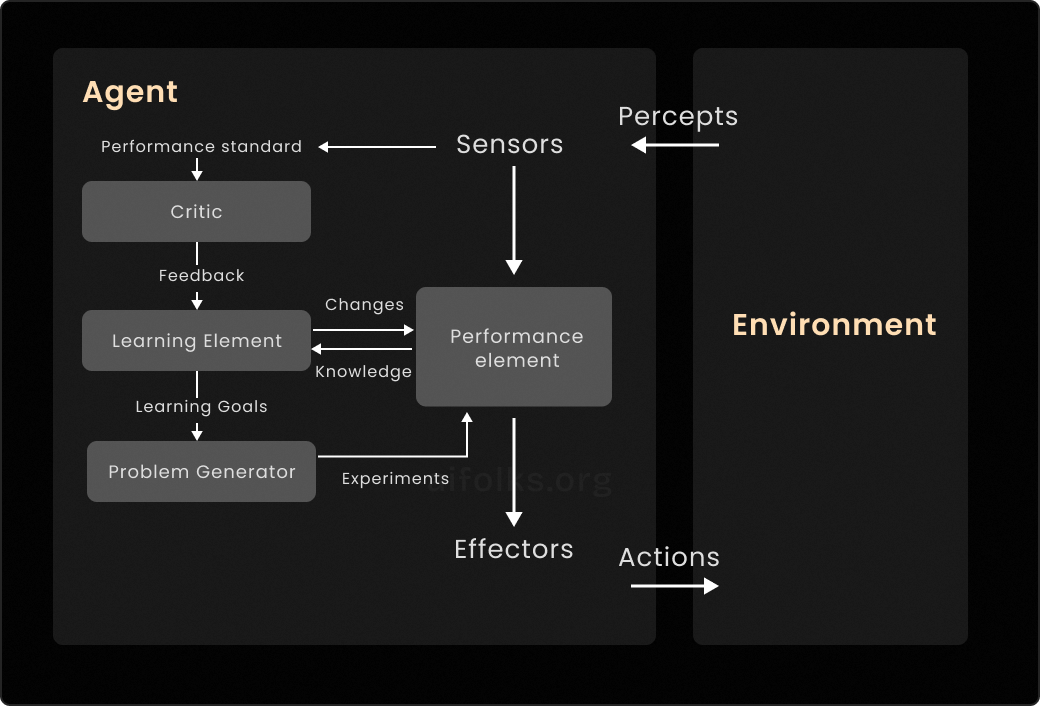
Simple comparison of the 5 types
Why this matters in AI engineering
Understanding these agent types helps you understand how modern AI systems are built.
A basic chatbot may only respond to messages. But a strong AI agent may need to:
- Understand the task
- Use the right tools
- Remember previous context
- Make a plan
- Compare options
- Take action
- Learn from feedback
This is why AI agents are closely connected to topics like RAG, tool use, memory, context engineering, and Model Context Protocol.
You can also read What is a Simple RAG? and What is Model Context Protocol? to understand how agents connect with knowledge and external tools.
Final thoughts
AI agents can be simple or advanced.
- A simple reflex agent follows rules.
- A model-based agent remembers the current state.
- A goal-based agent works toward a target.
- A utility-based agent chooses the best option.
- A learning agent improves over time.
Together, these five types give us a simple way to understand how agents think, act, and improve.
At AI Folks, we help learners understand AI engineering concepts like agents, RAG, MCP, and context engineering in a simple and practical way.
Join the AI Folks community to start learning how real AI systems are built.